Henry Morgan
Privateer of Panama
c.1635 – 25 August 1688
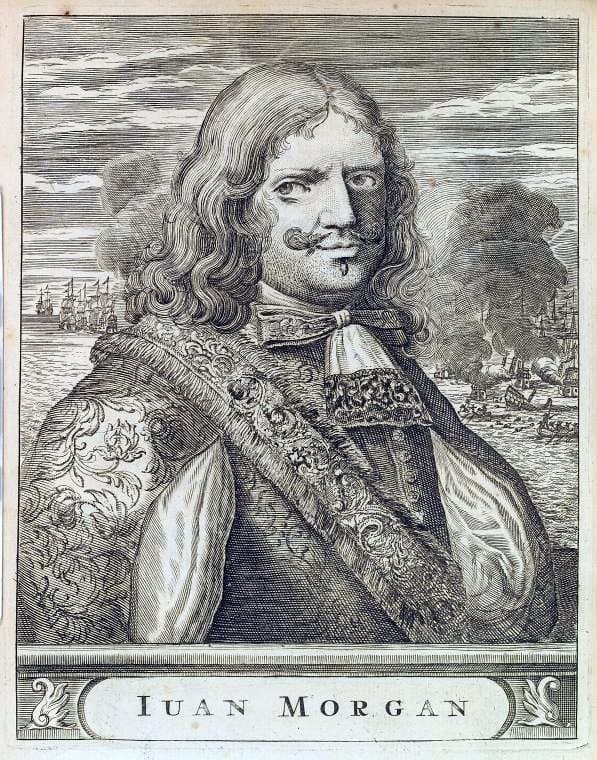
Henry Morgan stands at the threshold of the Golden Age proper. He was a buccaneer — a privateer operating under English commission against Spanish ports during a period of undeclared war — rather than a pirate in the technical sense. But the scale and violence of his expeditions, and the line he walked between sanctioned warfare and outright robbery, made him the most famous and the most feared captain in the Caribbean of his day.
Portobelo, 1668
In July 1668 Morgan led roughly five hundred men against Portobelo, on the Caribbean coast of Panama — one of the most heavily fortified ports in the Spanish Main. The buccaneers slipped past the harbor's outer defenses by canoe at night, stormed the city, and held it for over a month while the President of Panama assembled a relief force. The ransom Morgan extracted ran to 100,000 pesos.
Sack of Maracaibo, 1669
The following year he raided the Venezuelan ports of Maracaibo and Gibraltar. When a Spanish squadron sealed the lagoon, Morgan loaded a captured vessel with tar, brimstone, and dressed-up wooden dummies, set it ablaze, and sent it as a fireship against the Spanish flagship. The flagship burned to the waterline. His fleet escaped through the bar.
Panama City, 1671
In January 1671 Morgan led nearly two thousand men across the Isthmus of Panama on foot — a brutal nine-day march through jungle — and routed a defending force more than twice his size on the plain outside Panama City. The city burned, though it is disputed whether Morgan ordered it or the retreating governor did. The loot was less than expected; the buccaneers grumbled that Morgan had cheated them of their share.
Knighthood
The Panama raid was an embarrassment for the English crown, which had recently signed the Treaty of Madrid with Spain. Morgan was arrested and shipped to London. But the political mood shifted; he was never charged, was lionized in the streets, and in 1674 was knighted by Charles II and sent back to Jamaica as Lieutenant Governor. From the same colonial council on which he had once been a defendant, he now signed the warrants that hanged the pirates of the next generation.
He died in Port Royal in 1688, prosperous and bloated, and was buried at Palisadoes Point — interred beneath the same ground that, four years later, the great earthquake would sink into the sea.
Related: Port Royal